Callara Skincare
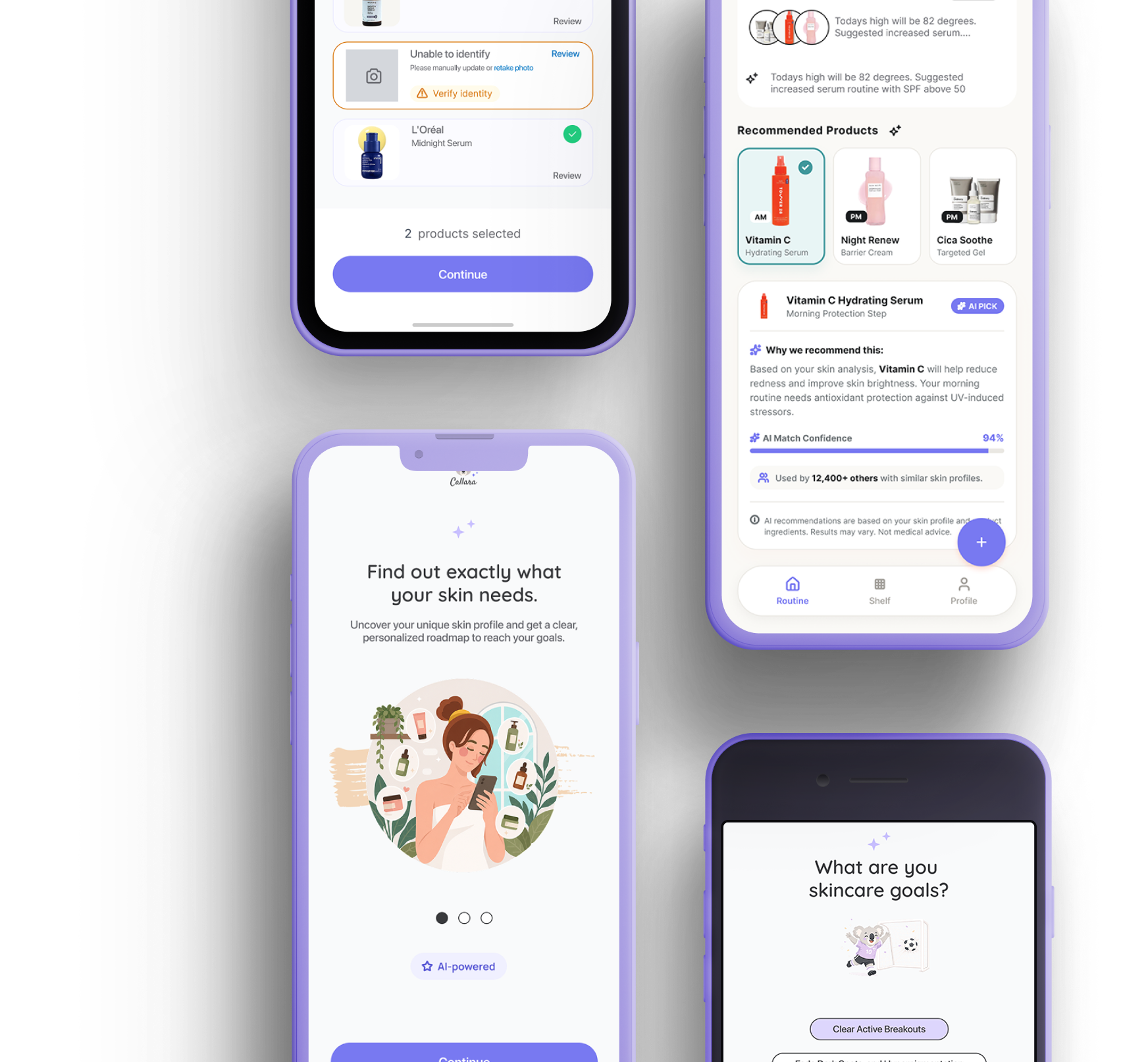
Callara is an AI skincare startup aimed to help users save time and money buying skincare products that are personalized to their biology. Callara's primary capability is an AI engine that analyzes and builds users' skin profiles. I was hired as a founding product designer. I designed their 0-1 onboarding, core experience, and AI strategy.
Overview
Callara is an AI skincare startup based in Japan with a target market of U.S. consumers, and a forecasted valuation of $2M MRR by next quarter. Callara's founders reached out to me for fractional design help with their prototype to help secure seed funding.
I designed and led the entire AI and UX strategy for Callara's onboarding, resulting in a 67% increase in product input and a 98% increase in users completing skin profile analysis. I delivered a robust prototype and automated a design-to-code pipeline with LLM tools before deploying the live code to the repo.
What I shipped
Five workstreams — from the 0-1 onboarding through a machine-readable design system that kept the AI on spec.
0-1 Onboarding
Data synthesis and core profile building
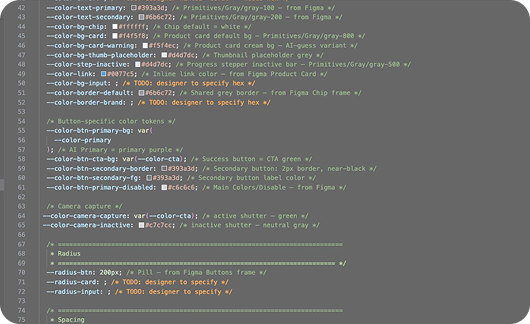
Machine readable design system
AI rules and strategy
Mobile native
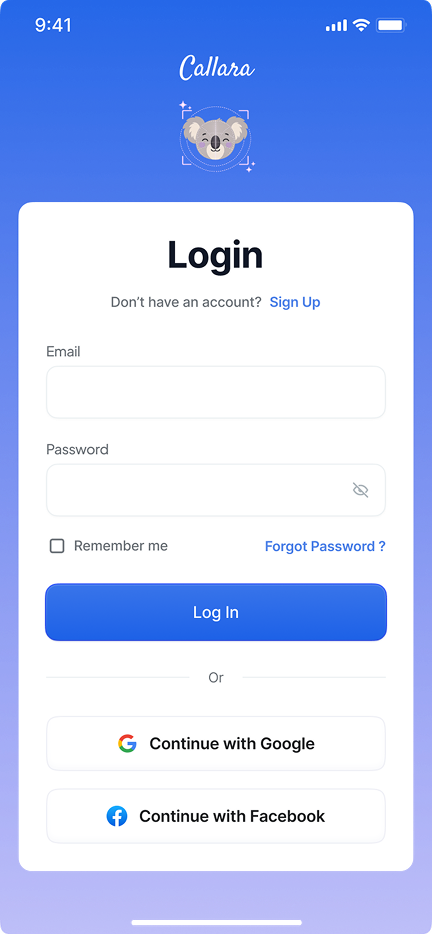
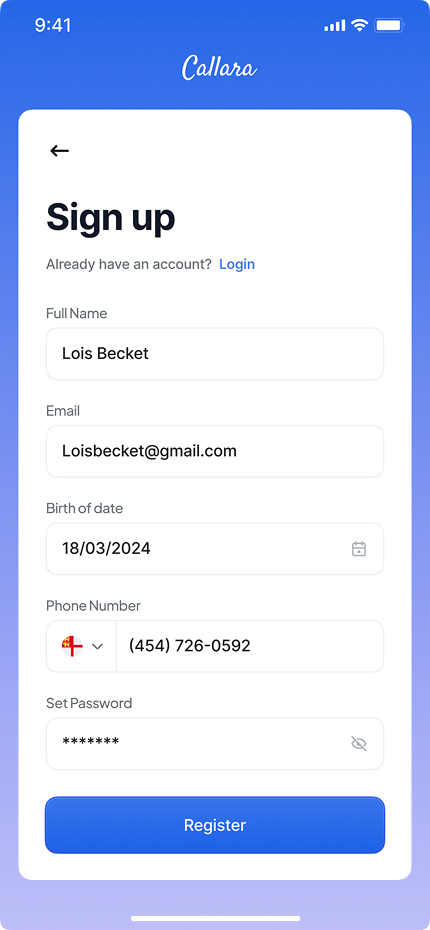
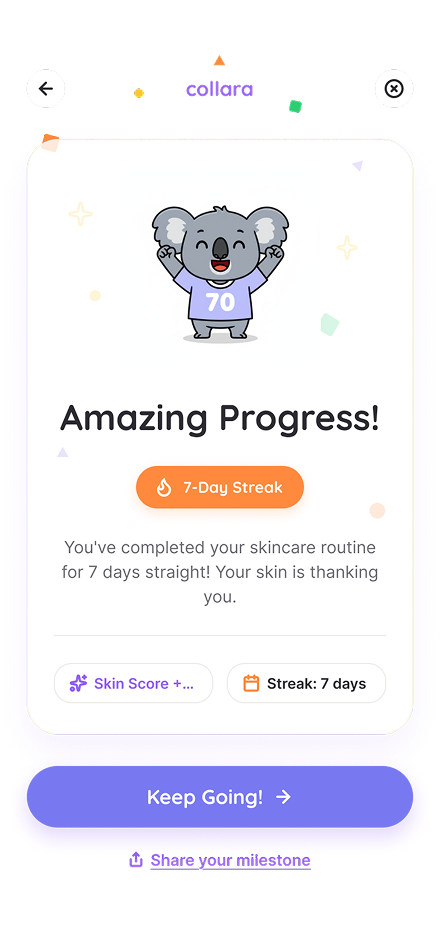
Impact
Increase in product input. (NS metric)
Increase in AI recommendation accuracy.
Increase in time to task completion
50% more users recommended Callara's product engine.
Reducing AI UI styling errors by 80%.
Problem and opportunity space
Challenges
Not clarified MVP and no data funnel
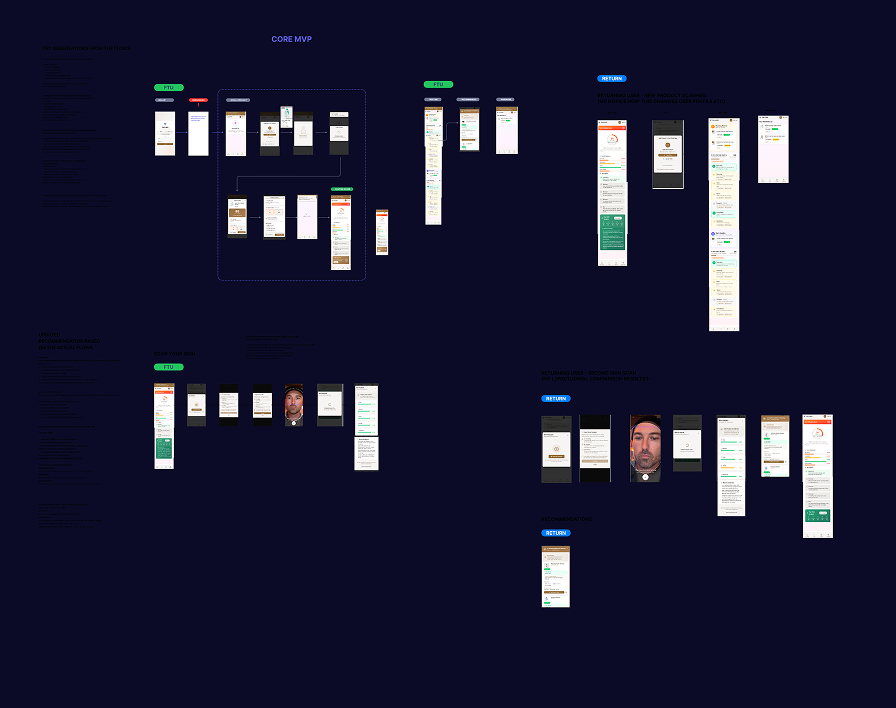
Not clarified MVP and no data funnel
Theinitialprototypewasbasedoffoflargeuserassumptionsthathadnotbeenvalidated.
Ipressedfounderstoaggressivelyvalidate,andremovefeaturesthatweren'tcrucialtotheirnorthstarmetric.
Wedefineduserproductinputasthemainlitmusforproducthealth,andprioritizedfeaturesarounditforphase1rollout.
AI prompted design caused drift
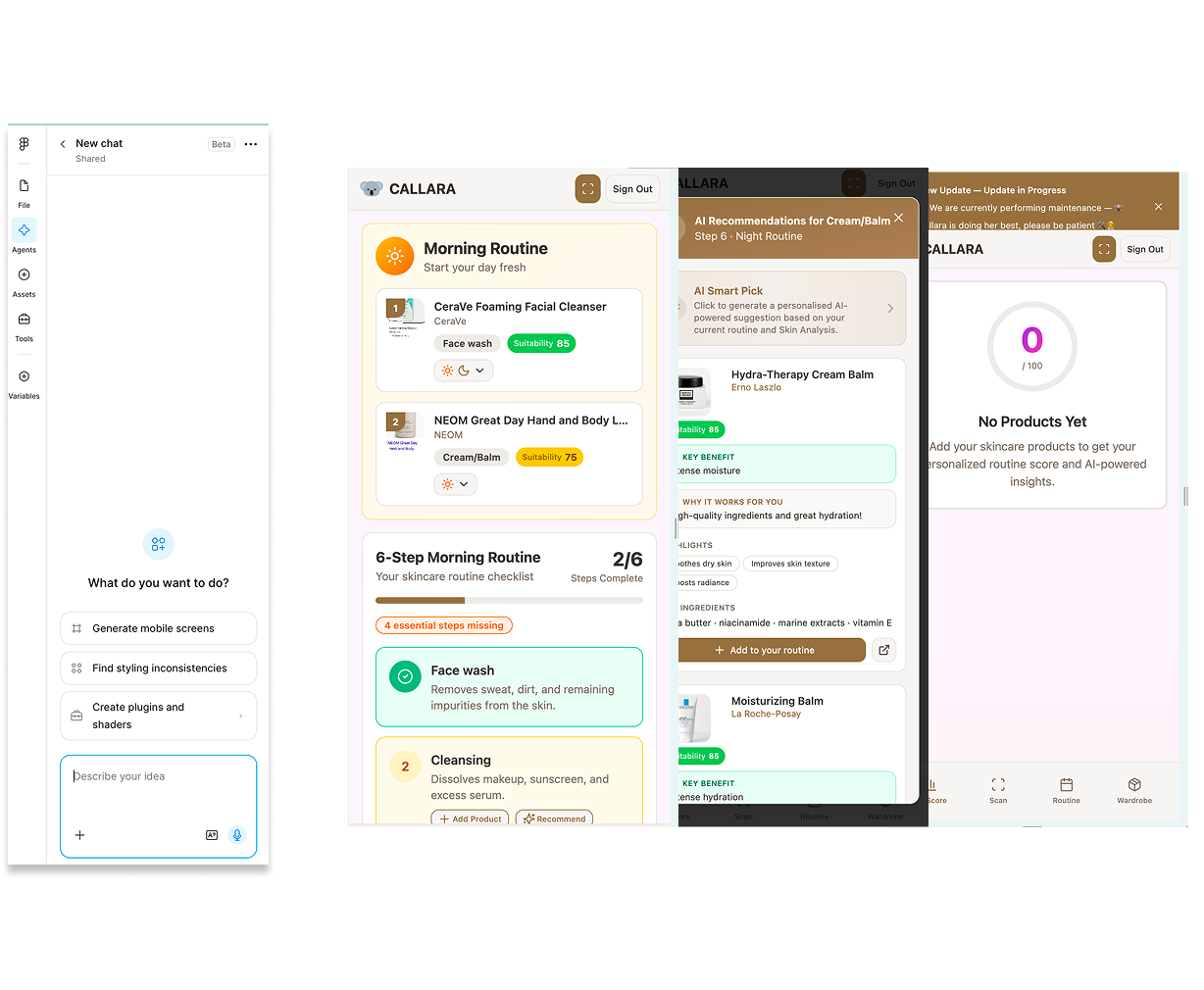
AI prompted design caused drift
Callara'steaminitiallyvibecodedtheirprototypeusinggenerativepromptsinFigmamake.Theproblemwasendlessdrifteverytimeasessionwasinitiated.
Theirprototypewasverycrudeandfragmented,withnodistinctbranding,components,hierarchy,userstates,orAIguidelines.
Collaboration
I worked directly with Callara's founders and engineers in live Figma sessions — pairing on the prototype, pressure-testing scope, and aligning the AI behaviour screen by screen.
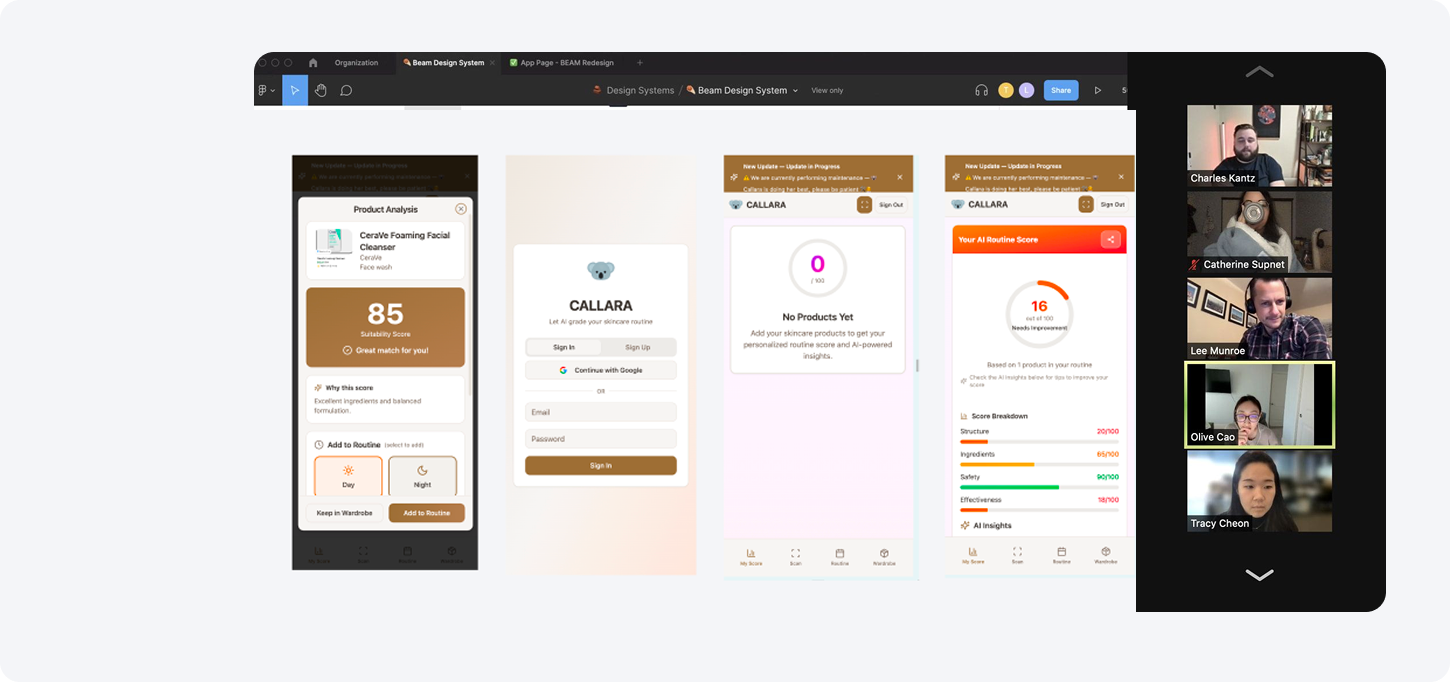
Alignment & metric selection
Why prioritize onboarding? An AI system is only as good as the data it receives. I identified weekly product input as our primary metric for retention.
By designing a structured onboarding experience first, we successfully captured critical user data. This immediately improved AI recommendation accuracy, established user trust, and turned early engagement into habitual weekly retention.
North-star metric
Weekly product input — every onboarding decision laddered up to it.
Initial designs, foundations and interaction
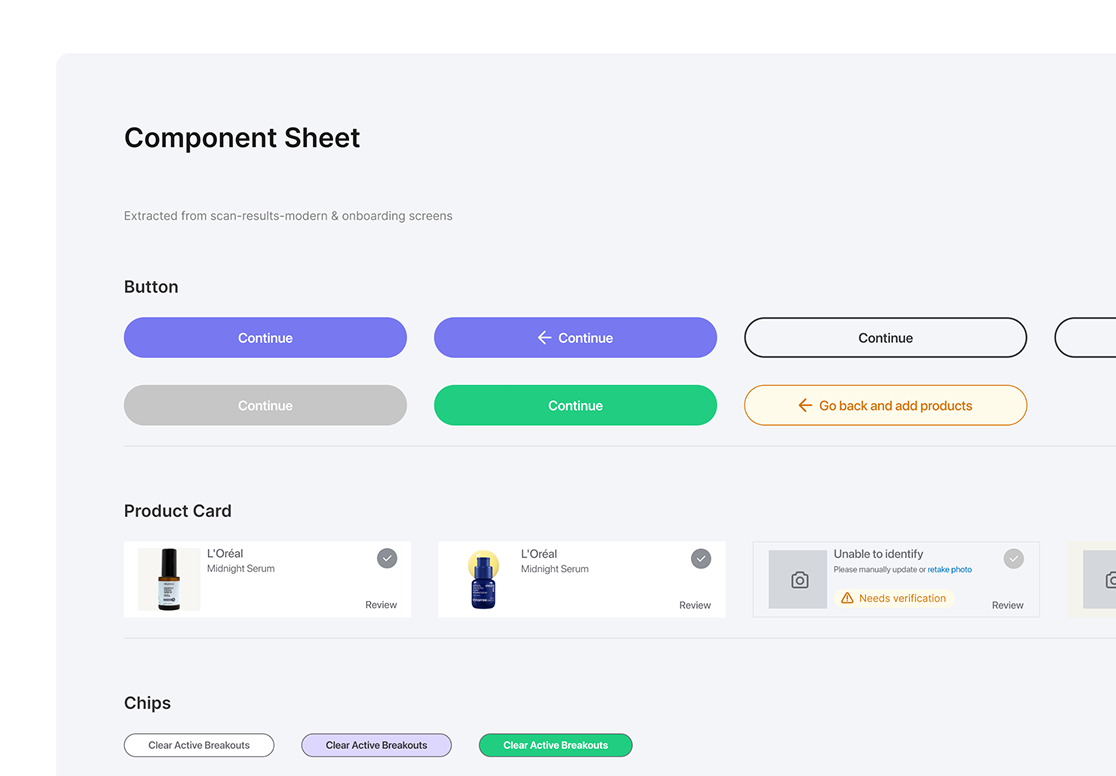
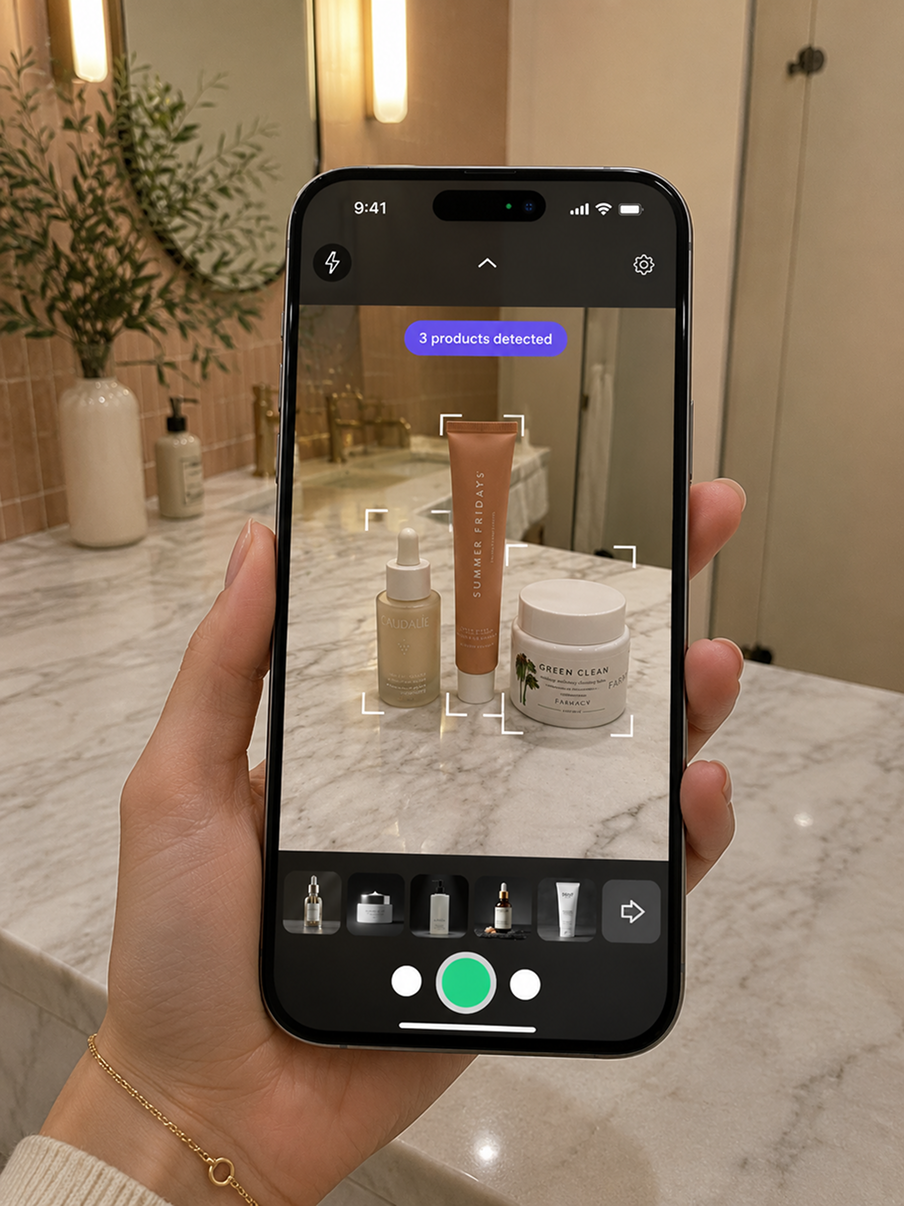

Setting up skills in Cursor to eliminate drift
I built a Cursor skill that treats Figma as the single source of truth, then audits the whole repo against it, catching anything that's drifted before it ever ships.
Hover to preview the skillHuman in the loop prototype
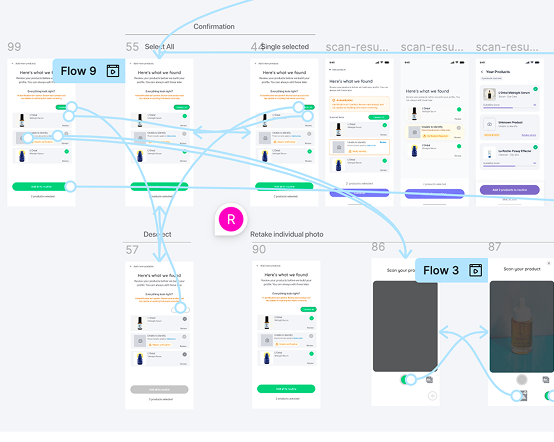
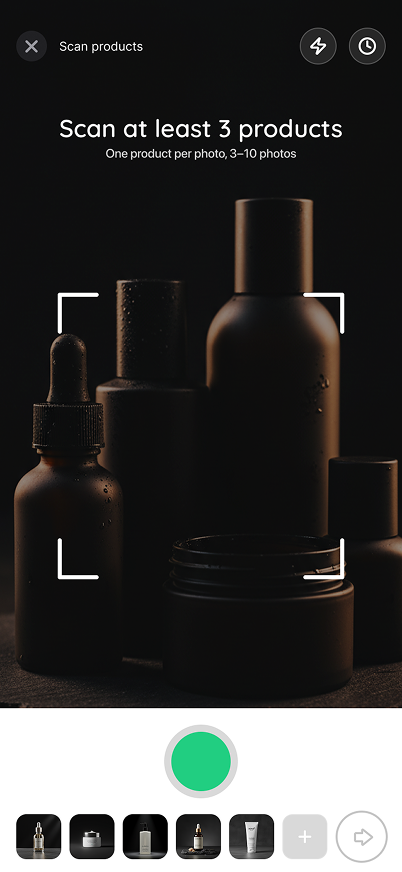
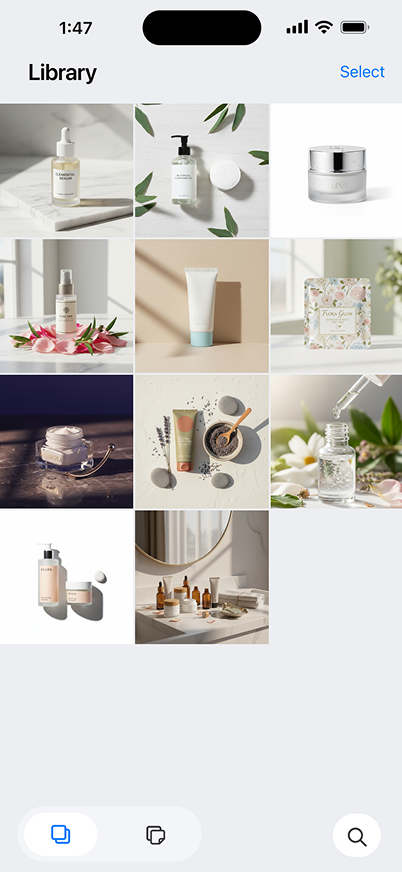
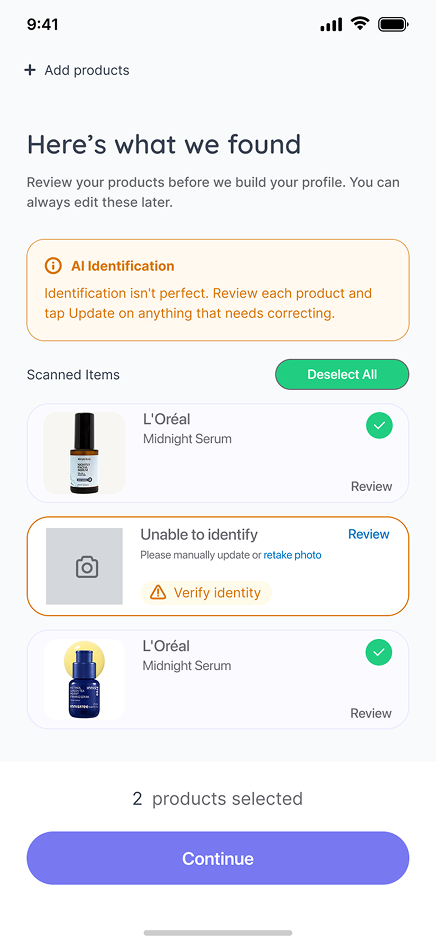
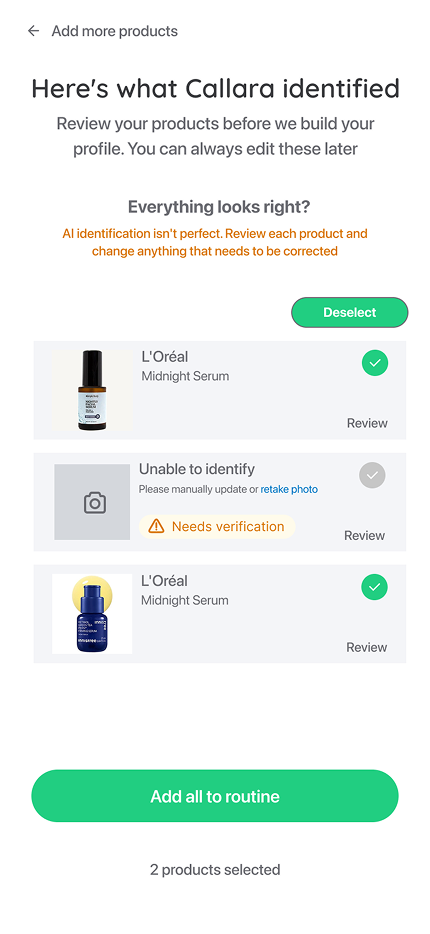
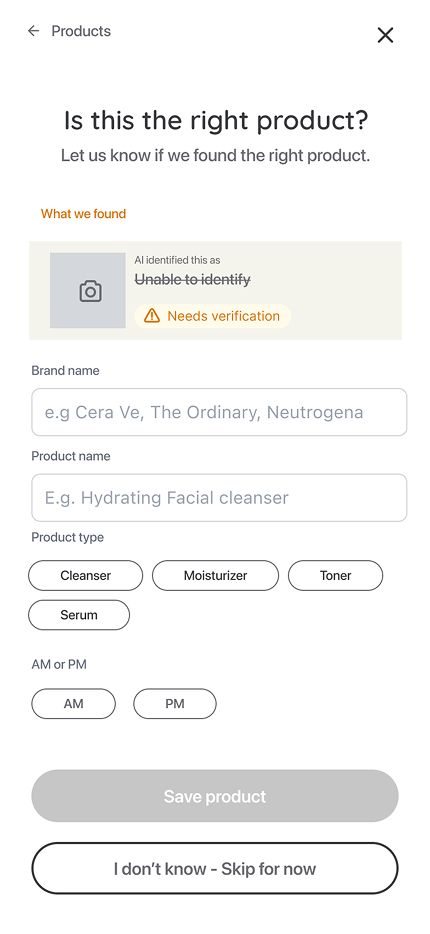
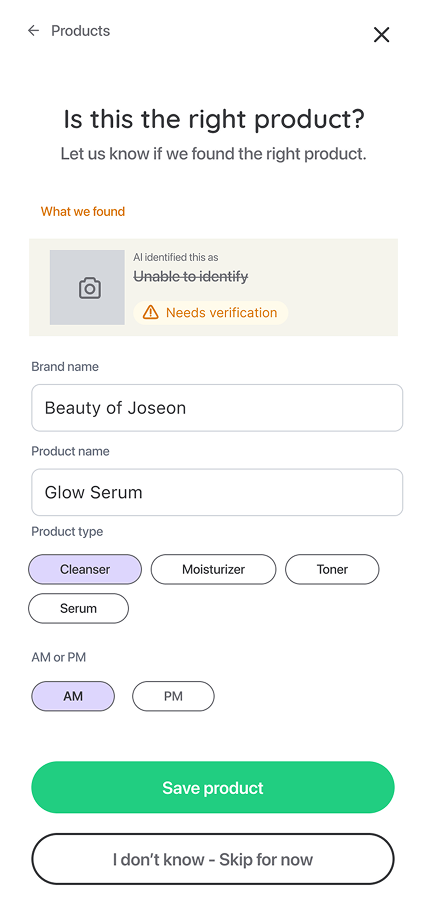
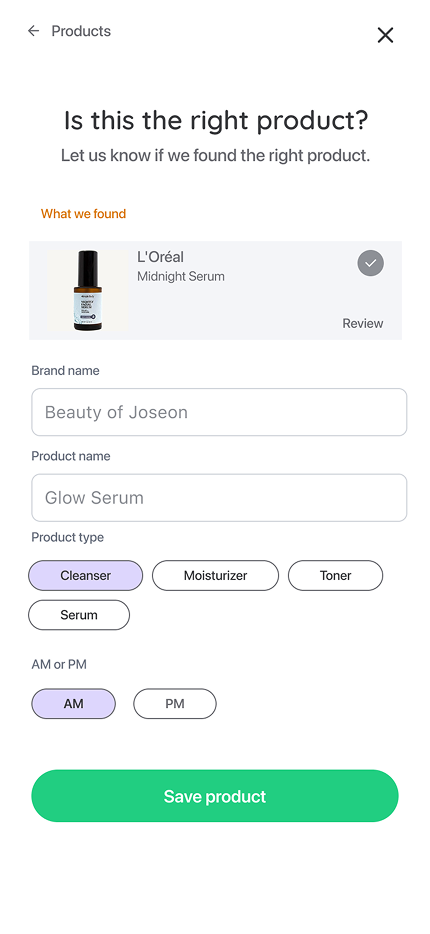
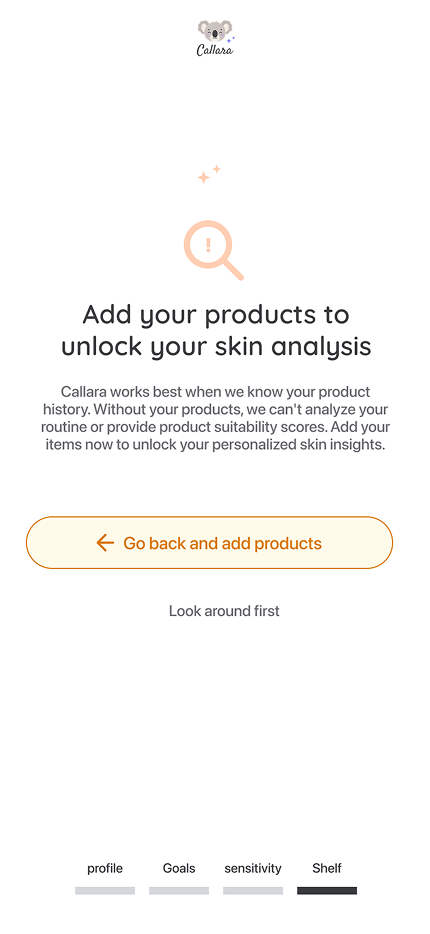
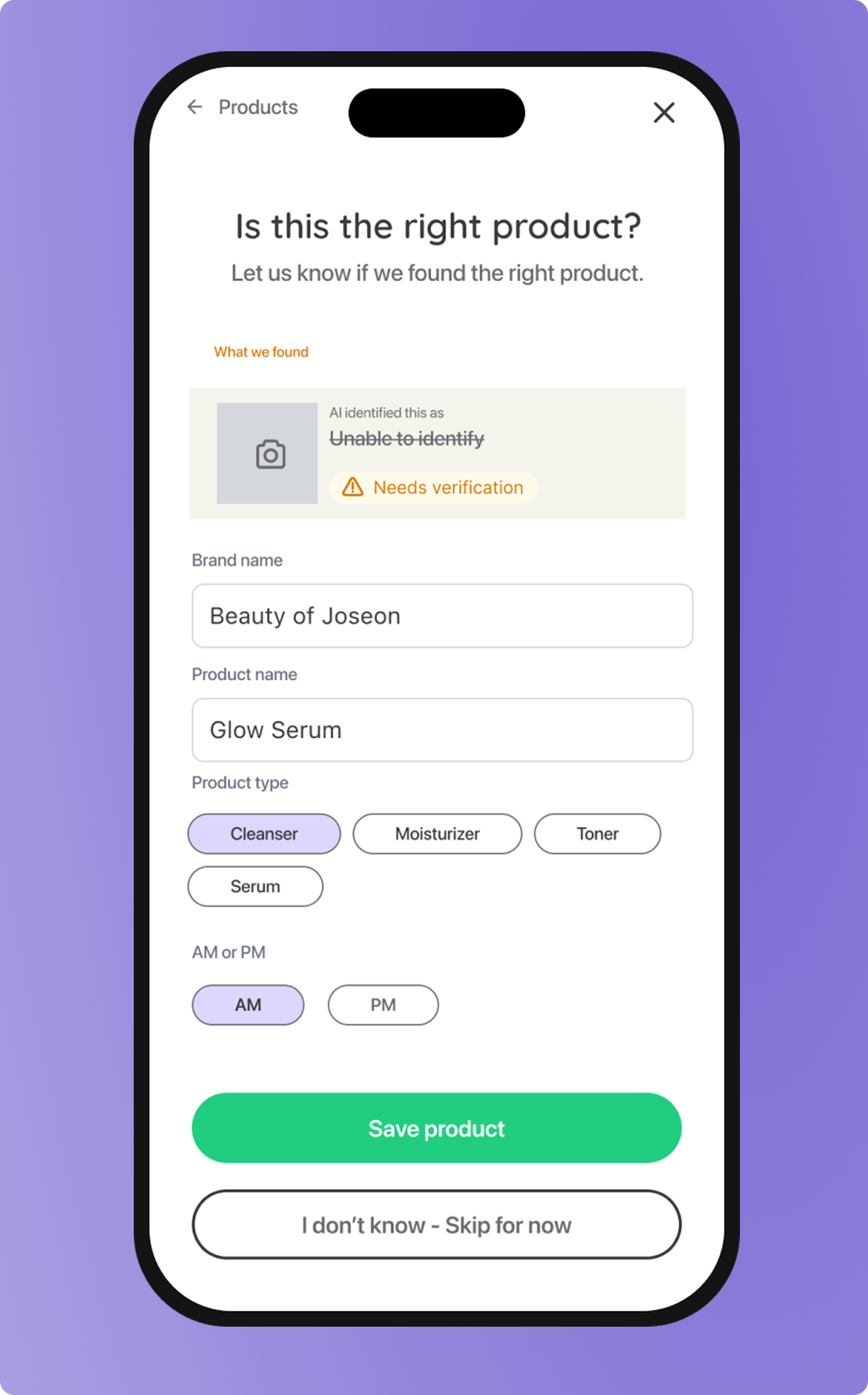
A working prototype of the add-products flow, showing how the AI surfaces suggestions while keeping a person in control of every decision.
Education, profile, product and guidance
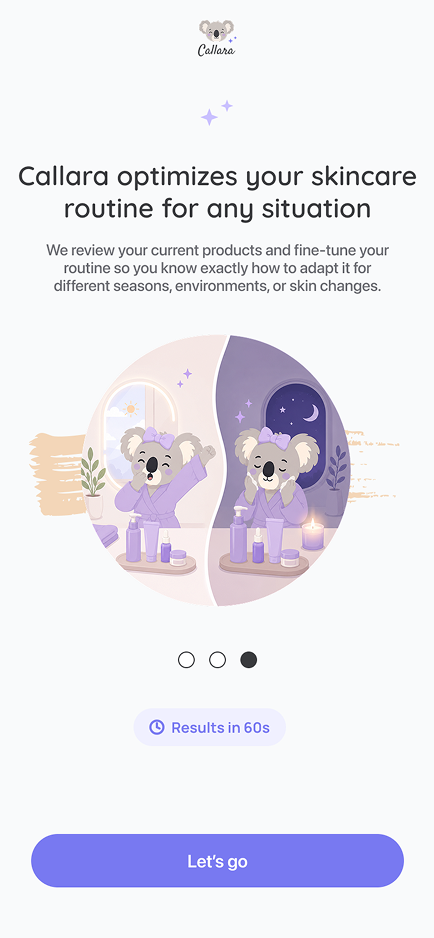
The flow was sequenced to earn trust before asking for data — teach, profile, identify products, then guide.
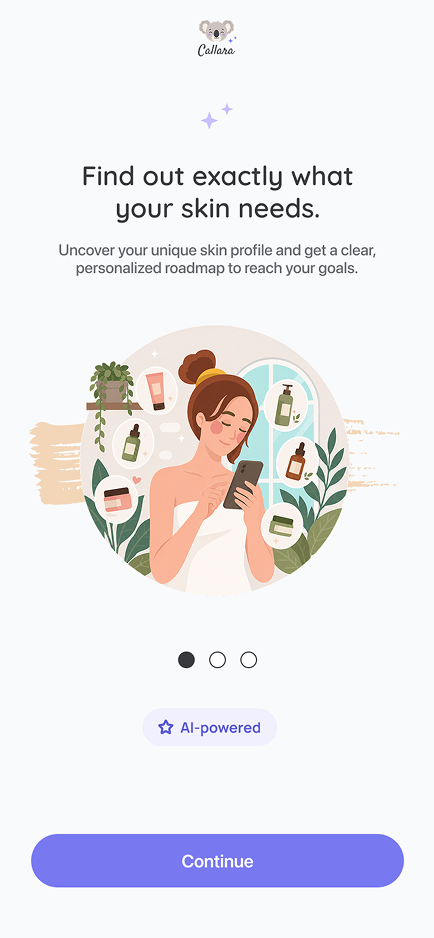
Education
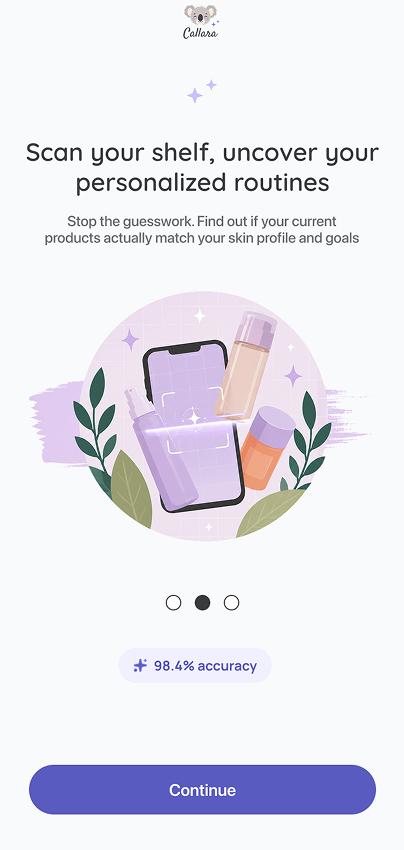
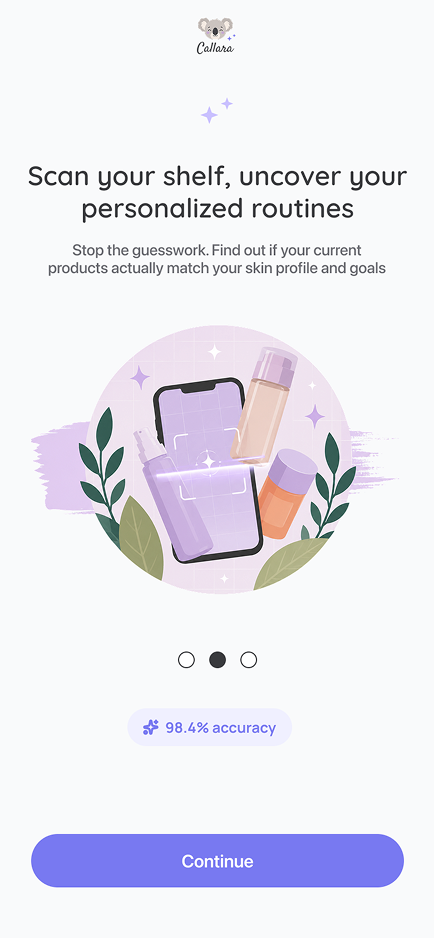
Set expectations up front — a 98.4% accuracy claim primes users to scan their shelf.
Profile
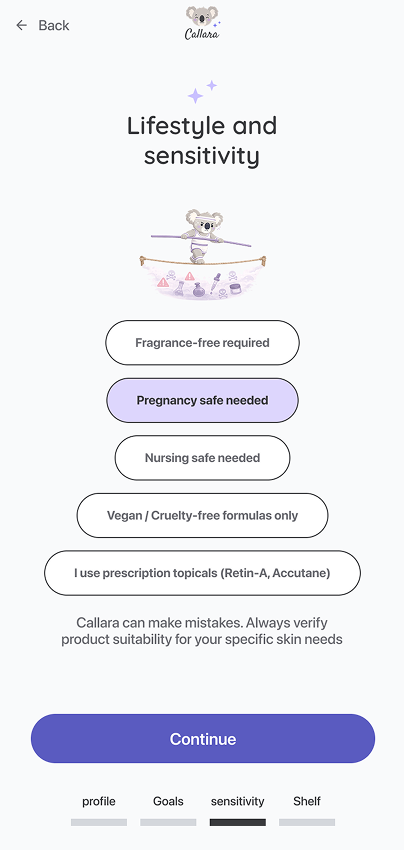
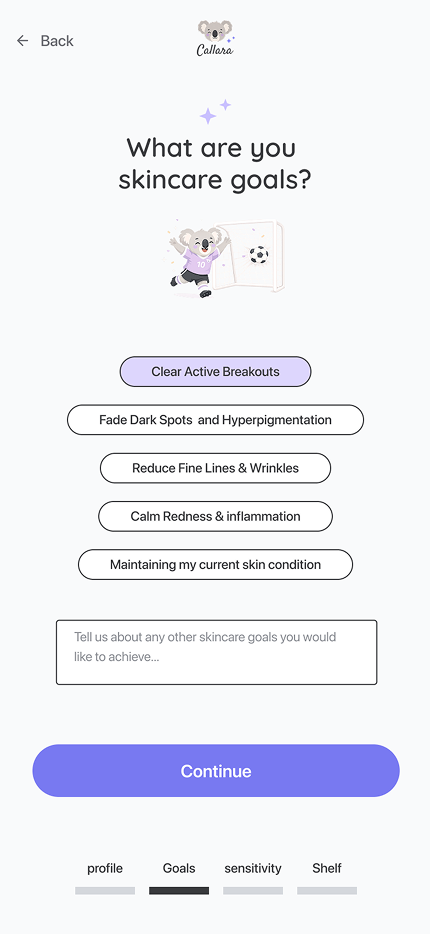
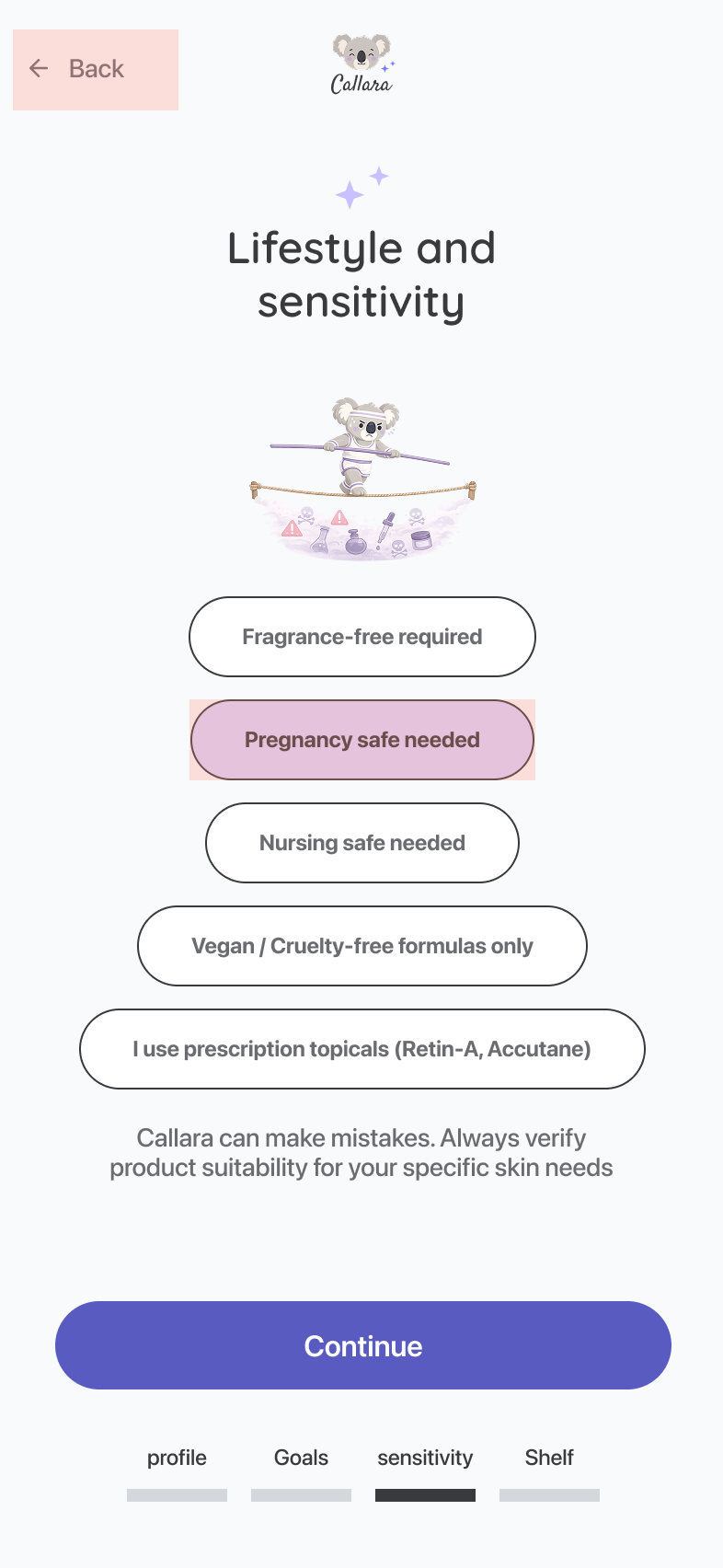
Lifestyle and sensitivity questions build the skin profile that powers every recommendation.
Product
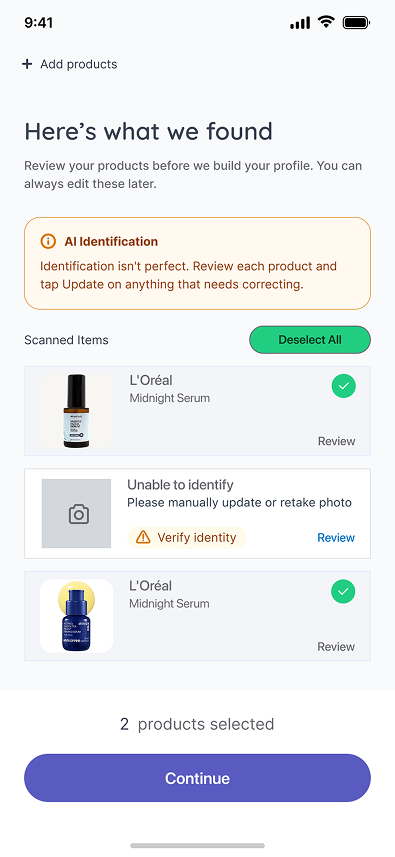
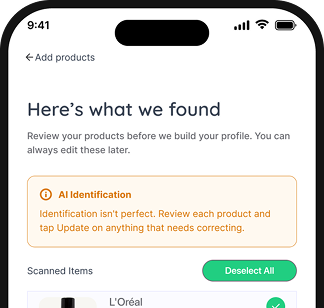
AI-identified products with clear review states for anything it could not read.
Guidance
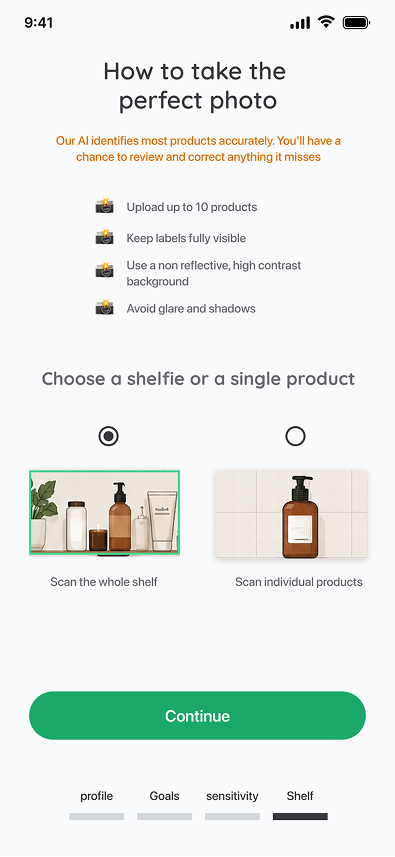
How to take the perfect photo — guidance that lifts scan accuracy before capture.
Mobile native and Material design constraints
I designed for both platforms natively — respecting iOS Human Interface Guidelines and Android Material Design so the same flow feels at home on each device.

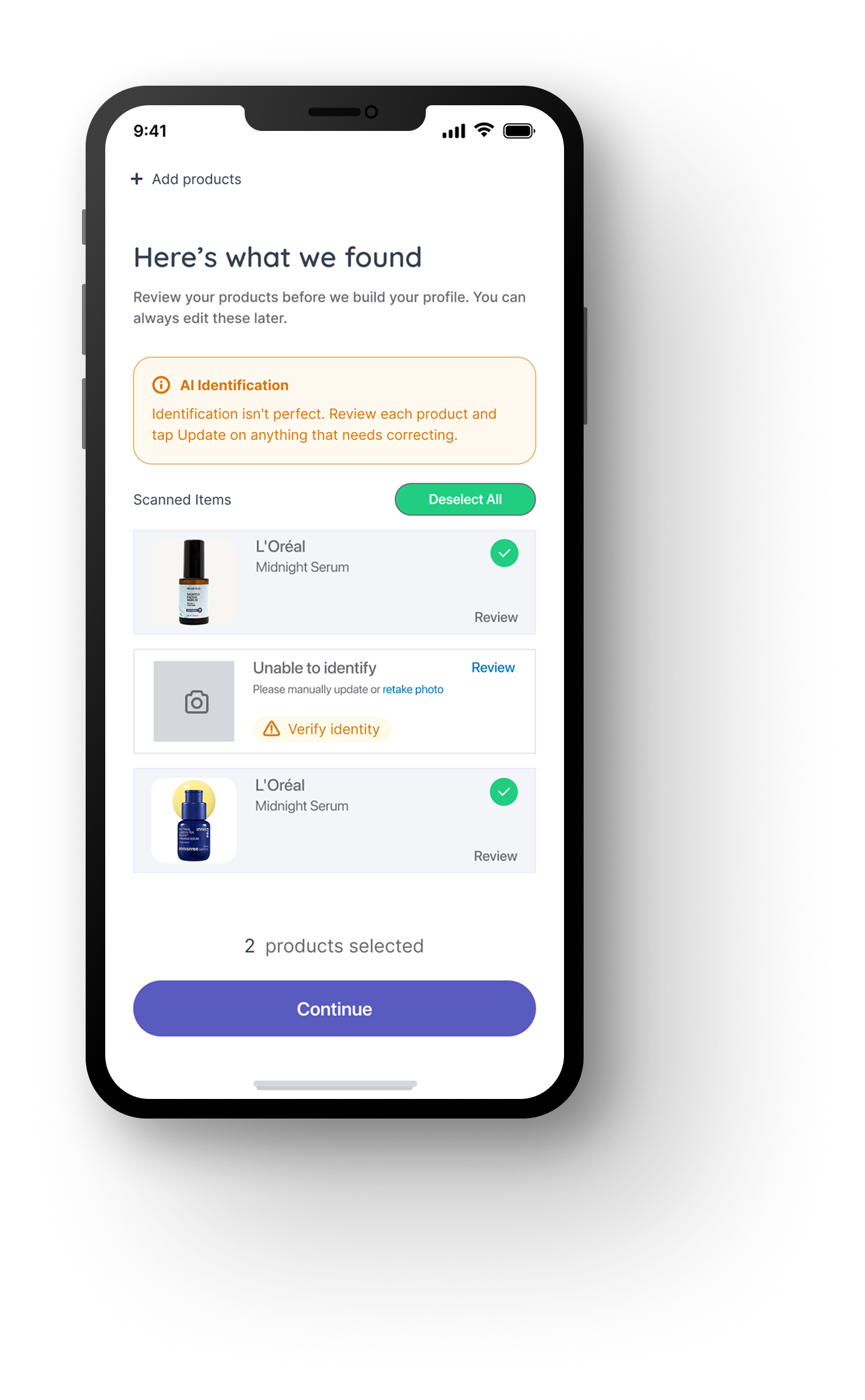
iOS — Human Interface Guidelines

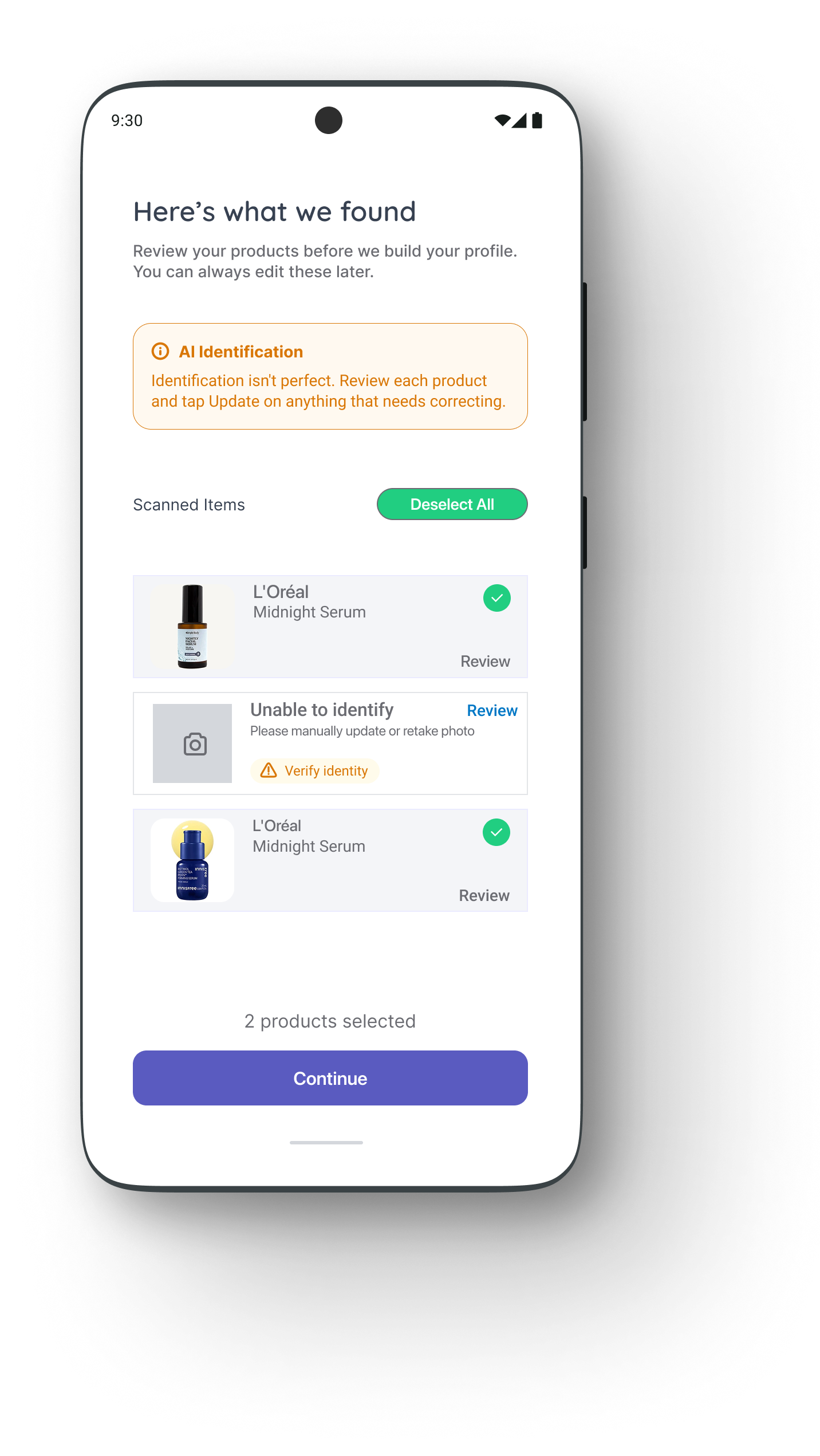
Android — Material Design
Accessibility audit
Screen: Lifestyle and sensitivity — a WCAG 2.1 review of colour contrast, touch targets, and semantic structure, then applied to the shipped screen.
Data synthesis
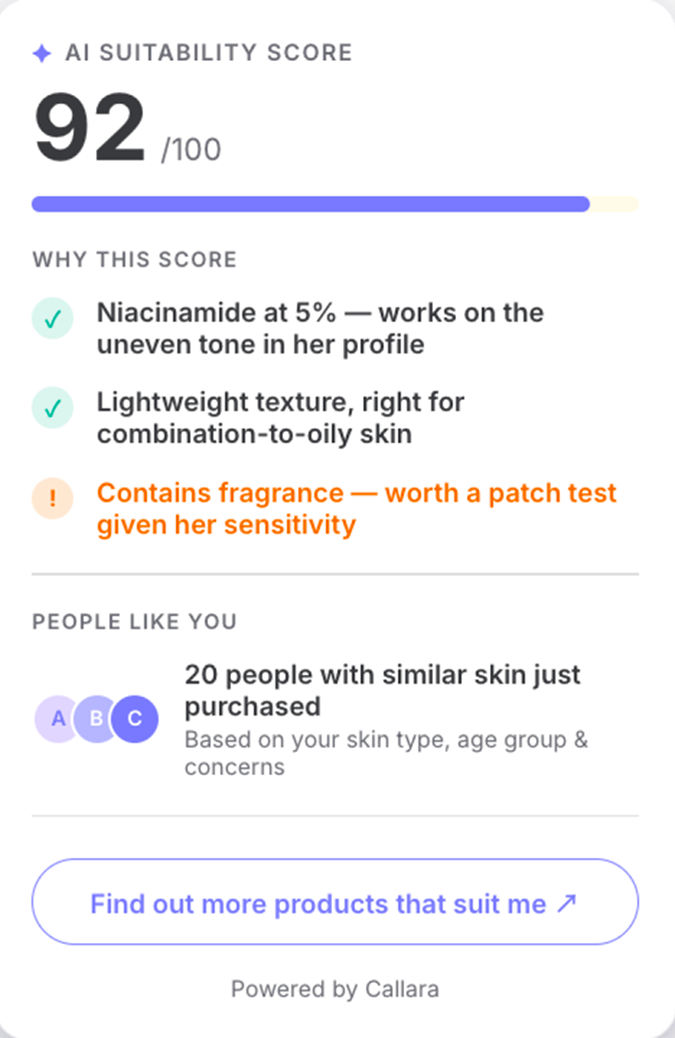
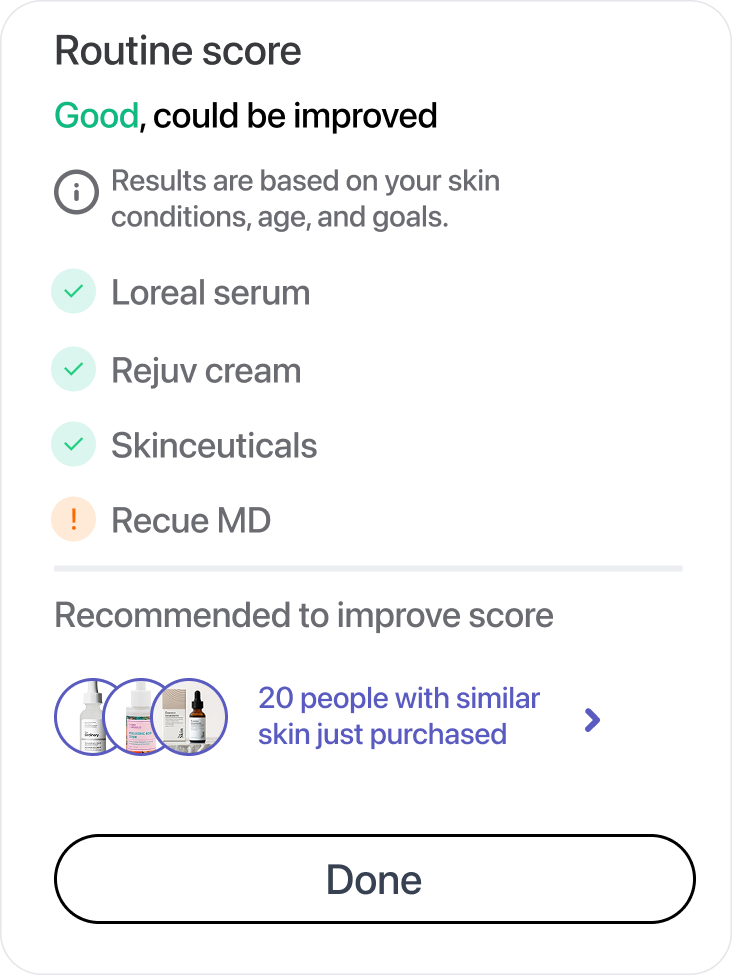
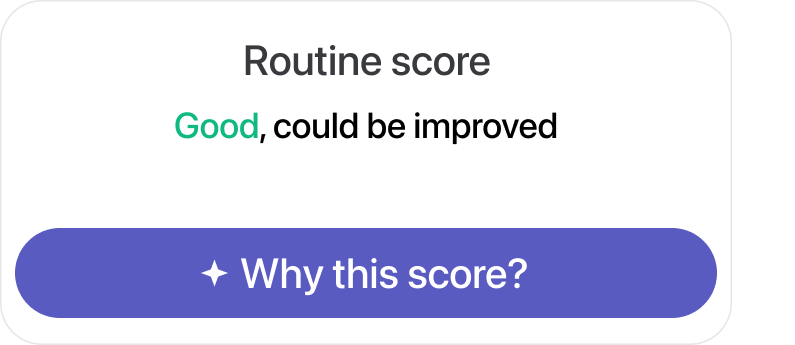
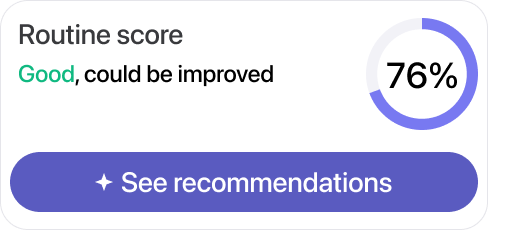
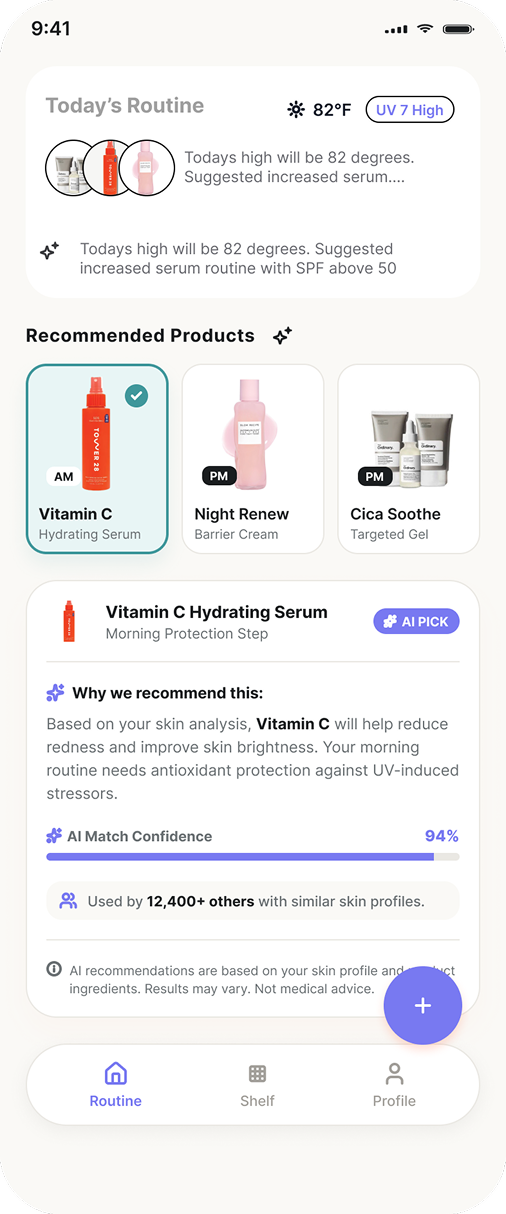
Once profiles were built, Callara synthesized product and habit data into a single routine score — the metric users returned for. I explored several ways to surface it and explain the “why”.